Signs Your Rig Needs Brake Service Before Your Next DOT Inspection
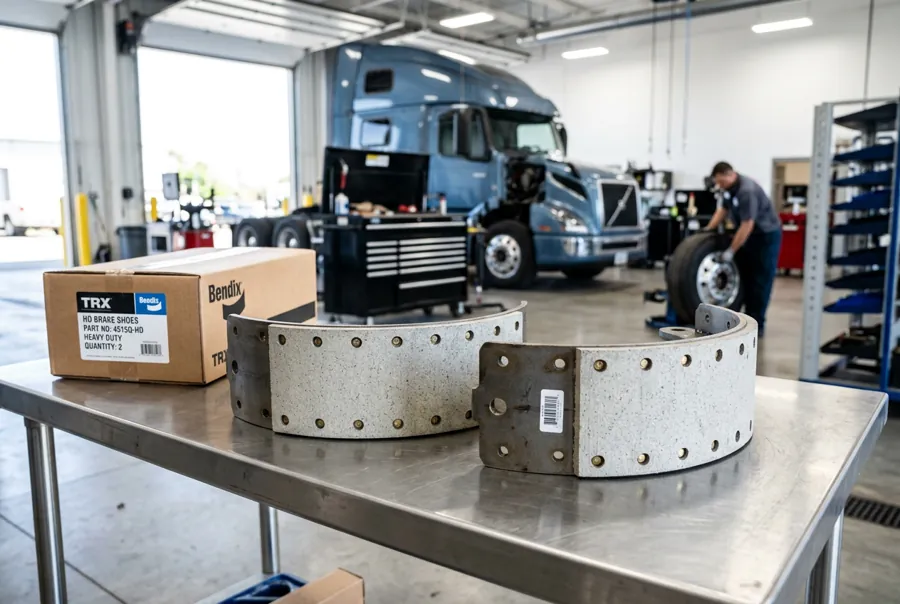
For semi-truck operators, few things end a workday faster than a failed DOT inspection — and few systems get flagged more often than brakes. Year after year, brake-related defects top the list of out-of-service violations during roadside inspections and CVSA Brake Safety events. If an inspector finds your brakes out of adjustment or your linings below the legal thickness, your rig isn't rolling again until it's fixed. That means lost miles, a missed delivery window, and a mark against your CSA score.
The good news is that brakes rarely fail without warning. Your truck usually tells you something is wrong long before an inspector does — through the way it stops, the sounds it makes, and how the air system behaves. Learning to read those signals is the difference between a scheduled 90-minute service and an unplanned out-of-service order on the shoulder of I-75. Here are the signs every driver and fleet manager around Atlanta and McDonough should watch for before the next inspection.
Why Brakes Fail DOT Inspections So Often
A Class 8 air-brake system is a big, hard-working assembly: shoes, drums, slack adjusters, S-cams, chambers, hoses, and the air supply that ties them together. Every one of those parts wears, heats, and drifts out of spec with miles. Automatic slack adjusters help, but they don't eliminate the need for inspection — a worn adjuster or a dragging shoe can quietly push a brake past its stroke limit. Add heat from a long grade, road grime, and moisture in the air lines, and it's easy to see why brakes are the component most likely to put a truck out of service. The system is designed to warn you first — you just have to be listening.
8 Warning Signs Your Rig Needs Brake Service
Most brake problems announce themselves. If you notice any of the following, get the brakes inspected before your next trip — and definitely before an inspection.
- Longer stopping distances. If it takes more pedal and more road to bring the truck down than it did a month ago, your linings, drums, or adjustment are telling you they need attention. Loaded stopping distance is exactly what inspectors and physics both care about.
- Slow air build-up or pressure drops. If the compressor takes too long to build pressure, the gauge sags under braking, or you hear the low-air warning more than you used to, you likely have a leak or a failing chamber. Air-loss rate is a direct inspection checkpoint.
- Grinding, squealing, or scraping. Metallic grinding usually means the friction material is gone and you're into the shoe or drum. Persistent squeal points to glazing or contamination. Either way, the noise is the cheap warning before the expensive repair.
- Pulling to one side when braking. If the truck drifts left or right under braking, one wheel-end is doing more work than the others — a sign of uneven wear, a seized adjuster, or a contaminated lining. Uneven braking is both a safety hazard and an inspection flag.
- A brake that runs hot. A wheel or hub that's noticeably hotter than the others after a run often means a shoe is dragging. Dragging brakes waste fuel, cook the lining, and can crack a drum. If you smell hot brakes at a stop, don't ignore it.
- Visible lining wear near the limit. Federal rules set minimum lining thickness, and inspectors carry the tools to measure it. If a quick look at the shoes shows you're getting close, you're one hard stop away from an out-of-service order.
- Cracked drums or glazed shoes. Heat cracks radiating across a drum face and shiny, glazed friction material both reduce braking power and will be written up. These are visual, obvious defects an inspector spots in seconds.
- Leaking wheel seals or contaminated linings. Oil or grease on the friction surface destroys braking performance and is an automatic violation. A leaking wheel seal is a small part that fails a whole wheel-end — catch it early.
What a DOT Inspector Actually Checks
During a Level I inspection, the brakes get serious attention. Inspectors look at pushrod travel to confirm the brakes are in adjustment, measure lining and pad thickness against the legal minimum, and check for cracked or missing components, audible air leaks, and proper air-loss rates. They also verify the tractor-protection system, low-air warning, and that the ABS malfunction lamp works correctly.
The rule that catches the most operators off guard is the 20-percent criterion: if 20% or more of a vehicle's brakes have a defect — out of adjustment, missing, or otherwise defective — the entire vehicle can be placed out of service. On a tractor-trailer with a lot of wheel-ends, it doesn't take many marginal brakes to cross that line.
The Real Cost of Waiting
It's tempting to push a marginal brake to the next scheduled shop visit. But an out-of-service order doesn't just cost you the repair — it strands the truck, blows the delivery window, and adds points to your CSA Vehicle Maintenance score that follow the operation for two years. Insurers and brokers look at those numbers. And that's before you consider the safety math: a brake that's marginal on flat ground can be dangerous on a loaded downhill grade. The cheapest brake job is always the one you schedule on your terms, not the one an inspector or a runaway ramp schedules for you.
How Mobile Brake Service Keeps You Compliant
Here's the part that makes staying compliant easy: you don't have to lose a day driving to a shop and waiting in line. F1 Fleet Maintenance brings certified brake service to your truck — at your yard, a truck stop, or wherever the rig is sitting across McDonough, Atlanta, and the surrounding areas. We handle pad, shoe, and drum service, slack-adjuster and pushrod-stroke checks, air-brake inspections, and DOT-ready documentation, all on-site while you rest or load.
That means a pre-inspection brake check can happen on your schedule, with zero deadhead miles and no shop queue. For fleets, we can build a preventive-maintenance plan so every wheel-end is inspected on a regular cadence and nothing drifts past the limit unnoticed. Compliance stops being a scramble and becomes a routine.
Rule of thumb: if your brakes look, sound, or feel different than they did last month, get them inspected before your next run — not after an inspector flags them.
Build Brake Checks Into Your Routine
The best defense against a surprise violation is a habit, not a heroic repair. Your daily pre-trip and post-trip inspections already require a look at the brakes — use them. Walk the wheel-ends, listen for air leaks after you charge the system, and pay attention to how the truck felt on that last downgrade. A pushrod that's creeping toward its stroke limit, a slack adjuster that's stopped adjusting, or a lining that's thinner on one side than the other are all things you can catch in a two-minute look if you know what you're looking for.
For fleets, the math is even clearer. One truck placed out of service for brakes can idle a load, trigger a re-inspection, and drag down your CSA percentile — while a scheduled preventive-maintenance visit costs a fraction of that and can be done overnight. Tracking brake wear across the fleet turns a reactive scramble into a predictable line item, and it keeps your drivers confident that the equipment under them will stop when they need it to.
Don't Guess — Get Inspected
Brakes give you plenty of warning before they fail an inspection. Longer stops, air-pressure trouble, noise, pulling, heat, thin linings, cracked drums, and leaking seals are all your truck asking for service. Catch them early and a DOT check becomes a formality instead of a gamble.
If your rig is showing any of these signs — or you simply want a clean bill of health before your next inspection — book a mobile brake service with F1 Fleet Maintenance and we'll come to you. Keep your rig rolling, your score clean, and your inspection stress-free.
Book a mobile brake inspection
We come to your yard, truck stop, or roadside across metro Atlanta — DOT-ready brake service with no shop trip and no downtime.